Connected Care Through Patient Eyes
I Am More Than Just a Chart Number
A Patient Perspective on Connected Care
My name is Justin Clark. I’m 68 years old, and I’m trying to stay healthy enough to keep living the life I love.
I’ve always been an outdoors person. I enjoy morning walks, working in the yard, fishing on quiet weekends, and taking the long way home just to enjoy the fresh air. As I’ve gotten older, staying active has become even more important. It isn’t just about exercise anymore. It’s about independence and continuing to do the things that remind me I’m still living life on my own terms.
Like many people my age, though, my healthcare has become more complicated.
Most mornings start the same way. I make a cup of coffee, check my blood sugar, take my medication, and glance at the appointment reminders sitting on the kitchen counter. One is from my primary care physician. Another is from my cardiologist. There is usually a lab slip tucked under the mail and a reminder for a follow-up appointment I almost forgot about.
My wife keeps telling me to put everything in one folder, and I try. The problem is, my healthcare story doesn’t fit neatly into a folder.
I have Type 2 diabetes, high blood pressure, high cholesterol, and a heart condition that requires regular monitoring. I also work with a behavioral health provider to manage anxiety and depression. Every provider is helping me with an important part of my health, but I am not made up of separate parts. I’m one person trying to stay healthy, stay independent, and keep showing up for the people and the life that matter to me.
At almost every appointment, I become the person responsible for connecting the dots. Every doctor’s office seems to know one piece of my story, and I just wish they all knew the whole story.
“When was your last lab work?”
“Did you complete your diabetic eye exam?”
“What medication are you taking now?”
“What did your cardiologist recommend?”
“Have there been any changes since your last visit?”
Sometimes I know the answers. Sometimes I only remember part of them. I remember the doctor, but not the exact date. I remember the medication, but not the dosage. I know I had a test done, but I cannot always remember where or whether those results ever made it into the right medical record.
I do my best, but there is a quiet pressure that comes with being both the patient and the messenger. It makes you wonder how often healthcare depends on someone’s memory instead of their medical history. That can be exhausting, because behind every question is a person who is still living a full life.
I am not just diabetes, a blood pressure reading, a medication list, or a chart number. I’m a husband, a father, a neighbor, and a grandfather. I’m someone who still wants to enjoy morning walks, spend weekends fishing, work in the yard, and drive myself to appointments without feeling like my healthcare has become a full-time job.
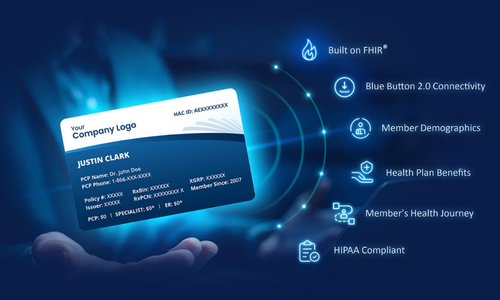
A few months ago, my health plan introduced something called the Health Access Card®. I’ll admit, I didn’t think much of it at first. Like most people, my wallet already had plenty of cards. An insurance card. A pharmacy card. My driver’s license. Store rewards cards. I assumed this would be one more piece of plastic I’d rarely use.
I couldn’t have been more wrong.
At a recent appointment, my provider needed information from another part of my medical history. In the past, that usually meant waiting for records to be faxed, making phone calls between offices, trying to remember details myself, or being asked to bring paperwork to my next appointment. This time was different.
My provider asked if I wanted to authorize access using my Health Access Card®. A secure code was sent directly to my phone. Within seconds, I approved the request, and my provider had access to the information they needed.
What surprised me wasn’t how quickly it happened. It was how different the appointment felt afterward. Instead of spending the first part of the visit trying to reconstruct my medical history, we spent our time talking about my health.
We talked about how my diabetes was affecting my heart. We discussed my medications, my activity level, and the goals we were working toward. The conversation became less about filling in missing pieces and more about helping me stay healthy. For the first time in a long time, it felt like my provider wasn’t just seeing pieces of my health. They were seeing my story.
That may sound like a small change, but when you’re the patient, it isn’t.
It matters when your physician can see more than one office visit. It matters when your care team understands how your conditions affect one another. It matters when your health history doesn’t have to be reconstructed from memory every time you walk into a new office. Most of all, it matters because it allows you to stop feeling responsible for carrying your entire healthcare story everywhere you go.
People sometimes ask me what makes the Health Access Card® different. For me, it isn’t really about the card. It’s about what the card makes possible.
It gives me confidence that my providers can see a more complete picture of my health. It gives me confidence that I’m still in control of who can access my information. And it gives me confidence that I can spend less time worrying about whether everyone has the right records and more time focusing on the things that matter most.
I’m still the same husband, the same father, and the same man who enjoys quiet mornings, fishing trips, and working in the yard. The difference is that now, when I walk into a doctor’s office, I feel like my healthcare can finally keep up with my life instead of asking me to carry it.
At 68 years old, that’s a pretty remarkable feeling.