Questions About Healthcare Coordination

What is care coordination in healthcare?
Care coordination is the process of organizing patient care activities across multiple healthcare providers to ensure patients receive the right care at the right time. It involves sharing information, aligning treatment plans, and managing care transitions to improve outcomes and reduce gaps in care.
Why is care coordination important in healthcare?
Care coordination is important because patients often receive care from multiple providers across different systems. Without coordination, information can be incomplete or delayed. Effective care coordination improves communication, reduces duplicate services, lowers costs, and supports better patient outcomes.
What are care coordination tools?
Care coordination tools are digital platforms that help healthcare providers communicate, share patient information, and manage care plans across teams and organizations. These tools improve data visibility, streamline workflows, and support more connected and efficient care delivery.
What is population health management in healthcare?
Population health management is the process of improving health outcomes for patient groups by analyzing data, identifying risks, and coordinating care across populations. It focuses on proactive care, prevention, and management of chronic conditions to improve outcomes and reduce overall healthcare costs.
How does care coordination improve patient outcomes?
Care coordination improves patient outcomes by ensuring providers have access to complete and timely patient information. When care teams communicate effectively and align on treatment plans, patients are more likely to receive consistent, timely care, reducing complications, hospital readmissions, and gaps in treatment.
Digital Care Coordination Technology
What is AaNeelCare®?
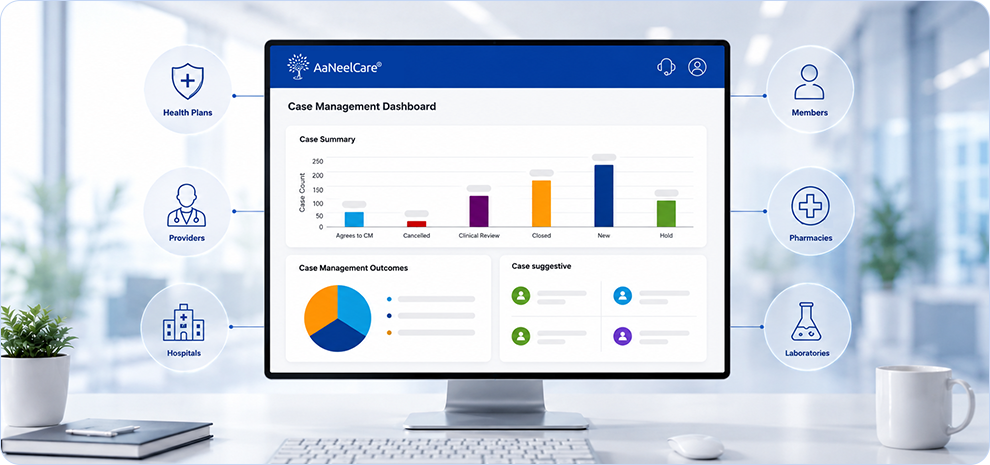
AaNeelCare® is a digital healthcare platform that connects patient data across systems and turns it into actionable insight. It combines data access, analytics, and workflows to give providers a unified view of the patient and support more informed, real-time decision-making.
How does AaNeelCare® support care coordination?
AaNeelCare® supports care coordination by enabling care teams to manage care plans, track patient progress, and stay aligned across settings. This helps ensure care is delivered consistently and reduces gaps between providers.
How does AaNeelCare® improve patient engagement?
AaNeelCare® improves patient engagement by making healthcare information more accessible and easier to understand. Better visibility into care plans and progress helps patients stay informed and more involved in their care.
How does technology support care management programs in healthcare?
Technology supports care management programs by helping teams monitor patient populations, use data analytics to identify care gaps, and coordinate timely interventions. This allows organizations to take a more proactive approach to managing patient health.
How does interoperability support care coordination platforms?
Interoperability enables healthcare systems to exchange and use patient data across organizations. This allows care coordination platforms to move beyond fragmented data and deliver a complete, usable view of the patient that supports faster, more informed decisions.
Value-Based Care & Performance
Why are healthcare organizations investing in value-based care platforms?
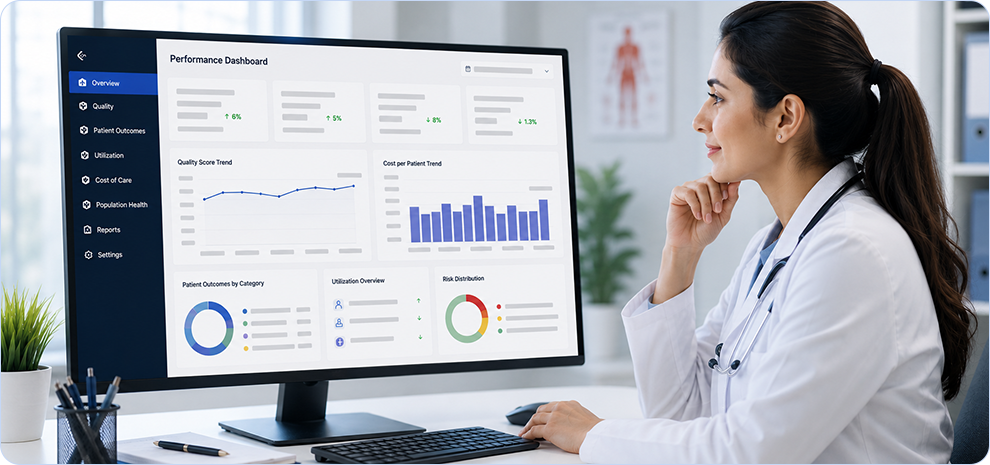
Healthcare organizations are investing in value-based care platforms to improve patient outcomes while managing costs. These platforms help track performance, manage risk, and use data and analytics to support more informed clinical and operational decisions.
What capabilities are required to succeed in value-based care?
Success in value-based care requires real-time data access, strong analytics, and coordinated workflows across care teams. Organizations need the ability to identify risks, close care gaps, and act on insights quickly to improve both quality and cost performance.
How do healthcare organizations use data analytics in value-based care?
Healthcare organizations use data analytics to identify high-risk patients, track performance metrics, and measure outcomes across populations. Analytics help prioritize interventions, reduce variability in care, and support more proactive decision-making.
How to Succeed in Value Based Care?
Improving performance in value-based care requires aligning data, analytics, and workflows so insights can be acted on in real time. Organizations must move beyond access to data and ensure it drives timely interventions, consistent execution, and measurable outcomes.
How does AaNeelCare® support value-based care performance?
AaNeelCare® supports value-based care by combining data access, analytics, and coordinated workflows into a unified platform. It helps organizations identify risk, close care gaps, and act on insights in real time, enabling more consistent performance across quality and cost measures.