Value-Based Care Strategy Forum

ACCESS Made Simple:
The CMS Model Everyone Will Be Talking About in 2026
Every few years, CMS introduces a new model that has the potential to reshape how care is delivered. ACCESS is one of those moments.
If you work in value-based care, primary care, chronic disease management, or digital health, the ACCESS Model will touch your world. It is bold. It is overdue. And yes, it is going to get a lot of attention.
But CMS announcements are rarely written in a way that helps people quickly understand the real story behind the policy. So let’s break it down in plain language and explain what ACCESS is, why it matters, who it helps, and what organizations should be doing now.
By the end of this blog, you will understand the model without ever needing to click away, but the CMS page is here for reference if you want it: https://www.cms.gov/priorities/innovation/innovation-models/access
Why ACCESS Exists in the First Place
Millions of people with Medicare live with chronic conditions like hypertension, diabetes, chronic pain, kidney disease, depression, and anxiety. These conditions do not improve because of one office visit every three months. They improve because of what happens every day in between.
The problem is simple. Medicare has never had a way to pay for the kind of technology-supported care that helps patients stay healthy between appointments.
Think about the tools people use now:
- Remote monitoring devices that track blood pressure or glucose.
- Wearables that measure sleep, movement, activity, and heart rate.
- Apps that coach nutrition, exercise, and behavior change.
- Virtual therapy and digital mental health tools.
- Telehealth that makes check-ins convenient and consistent.
These tools are not the future. They are here. Patients use them. Clinicians trust them. But Medicare’s payment system was built long before any of this existed. So even when these tools could prevent hospitalization or improve chronic disease control, there was simply no pathway to support them.
ACCESS finally acknowledges that modern care does not fit inside the walls of a clinic.
The Big Idea Behind ACCESS: Pay for Outcomes, Not Activities
ACCESS introduces something CMS calls Outcome-Aligned Payments, and they are exactly what they sound like.
Organizations get recurring payments to manage patients’ qualifying chronic conditions. The payment is fully earned when the patient’s health measurably improves or stabilizes, depending on where they started.
This is a major shift. Instead of paying for tasks, ACCESS pays for results.
Examples include:
- Helping someone with hypertension reduce their blood pressure.
- Bringing A1c levels down for diabetes.
- Improving depression scores with validated tools.
- Reducing pain and improving function for MSK patients.
This gives clinicians the freedom to care for patients in ways that actually work, whether that is a video visit, a wearable, an app, a coaching program, a remote therapeutic, or an in-person appointment.
Outcome-Aligned Payments mean clinicians can finally use modern tools without worrying about whether Medicare will cover them.
Who ACCESS Is Designed For
ACCESS is built for organizations that are ready to manage chronic conditions in a more connected, technology-enabled way. This includes:
- Primary care groups
- ACOs and value-based care organizations
- Multi-specialty groups treating chronic disease
- Digital health and virtual care companies
- Care management organizations
- RPM and RTM-enabled programs
To participate, organizations must enroll in Medicare Part B, designate a physician Clinical Director, comply with HIPAA and FDA requirements, and demonstrate the capability to offer coordinated care.
If your organization already operates in value-based care or chronic disease management, ACCESS is a natural extension of the work you do.
The Clinical Tracks: Four Areas Where ACCESS Wants to Move the Needle
ACCESS focuses on the most common and most impactful chronic conditions.
- Early Cardio-Kidney-Metabolic: Hypertension, dyslipidemia, overweight or obesity, prediabetes
This track targets patients early, before disease progression increases risk and cost. - Cardio-Kidney-Metabolic: Diabetes, CKD stages 3a or 3b, atherosclerotic cardiovascular disease
The CKM category is one of the most expensive in Medicare. ACCESS aims to bring continuous management into the foreground.
- Musculoskeletal: Chronic musculoskeletal pain
Chronic pain affects mobility, mental health, and quality of life. ACCESS encourages multimodal support. - Behavioral Health: Depression and anxiety
These conditions drive utilization across all parts of the system. ACCESS supports integrated behavioral health approaches.
Each track comes with specific clinical targets, validated outcome measures, and a performance structure that rewards improvement across the full panel of patients.
How ACCESS Actually Works for Patients and Clinicians
Picture a patient with diabetes who struggles to maintain stable A1c levels. Under ACCESS, that patient can receive a combination of in-person visits, virtual visits, coaching, guidance, device-supported monitoring, and educational support.
Patients enroll voluntarily. They keep every Medicare right and benefit. Their PCP remains central to their care.
ACCESS organizations are required to send regular electronic updates to referring clinicians, and PCPs can even bill a co-management payment for reviewing and acting on those updates.
ACCESS is not meant to replace the traditional healthcare relationship. It is designed to make that relationship stronger.
How CMS Measures Success
CMS will evaluate performance based on the proportion of patients who meet their outcome targets. This approach rewards organizations that can manage chronic conditions at scale and recognizes that not every patient will meet every target.
Performance data will be risk-adjusted and published publicly so patients and referring clinicians can make informed choices.
This transparency marks another major step forward.
Where AaNeel Fits Into the ACCESS Model
Organizations cannot succeed in ACCESS without strong digital infrastructure, real-time data flow, outcome tracking, and patient engagement tools that keep people active in their own care.
AaNeel supports ACCESS readiness in several ways.
- A unified, connected data ecosystem
ACCESS requires seamless exchange of clinical data, wearable inputs, remote monitoring, diagnostic results, PROMs, and condition-specific metrics. AaNeel already integrates these elements into a single longitudinal record.
- Predictive analytics for early detection
To improve outcomes, organizations must identify risk before deterioration occurs. AaNeel’s analytics surface trends and alert care teams to rising-risk patients who need timely intervention.
- Integrated care management
ACCESS organizations must deliver ongoing, multi-touch support. AaNeel’s care management tools combine outreach, documentation, engagement, education, and follow-up in one workflow.
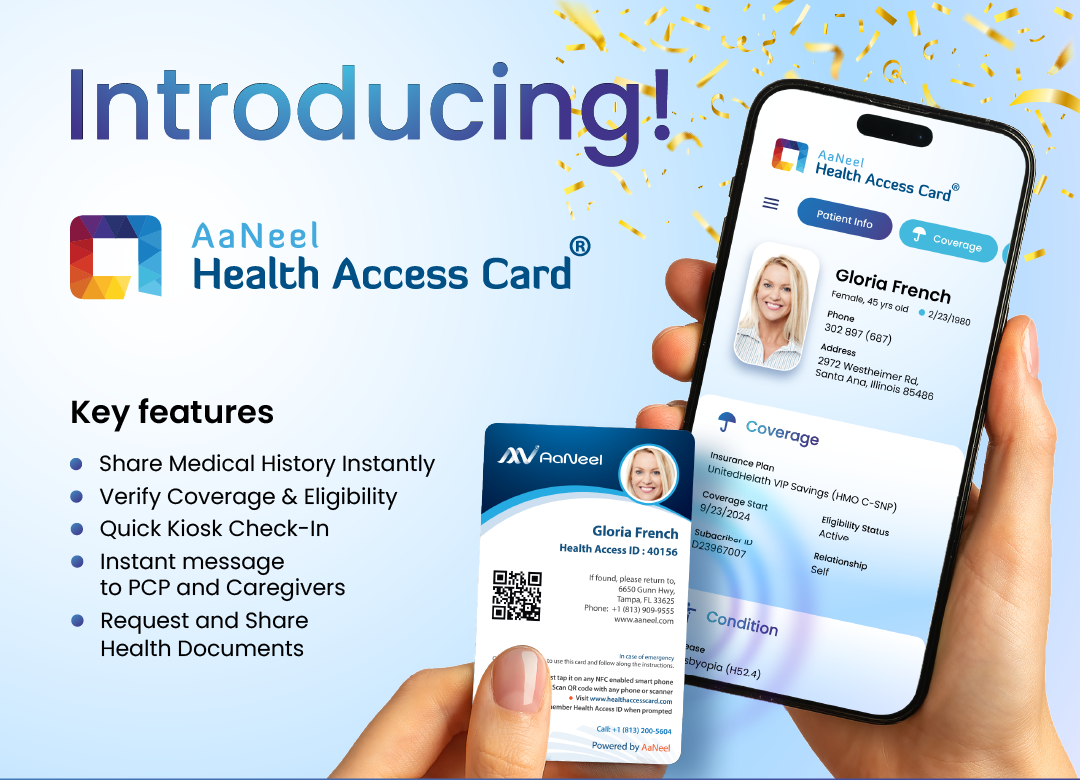
- The Health Access ID Card
CMS emphasizes empowerment and transparency. AaNeel enables patients to carry their own health information through a portable, real-time Health Access ID Card that strengthens engagement and decision-making.
- Outcome reporting and compliance
ACCESS requires performance measurement and public reporting. AaNeel’s dashboards and reporting tools simplify data capture and outcome tracking.
Preparing Now for ACCESS Success
Applications for the first performance year are due by April 1, 2026. That may feel distant, but building the infrastructure required for ACCESS takes time.
Organizations can begin today by assessing:
- Digital readiness
- Data interoperability
- Chronic care pathways
- Patient engagement strategies
- Outcome tracking capabilities
- Care team workflows
- Technology partnership
ACCESS represents the next era of chronic care in Original Medicare. It is prevention-focused. It is tech-enabled. It is patient-centered. And it is designed to reward what truly matters: improved health.
AaNeel is ready to help organizations modernize their care models and thrive in this new environment.