Prior Authorization

What Patient Involvement
Reveals About Prior Authorization
Prior authorization is designed to support appropriate care while helping health plans manage utilization and healthcare spending. In theory, much of that process takes place between the health plan and the provider.
In practice, patients and caregivers are often pulled directly into the middle.
A recent study published in JAMA Network Open offers an important opportunity to look beyond approval and denial rates and examine something that receives far less attention: who is actually doing the work required to keep a prior authorization moving?
The 2026 study surveyed 997 adults about recent prior authorization experiences. Among respondents, 286 reported dealing with prior authorization for their own care and 182 reported managing the process for a family member or friend. More than 61% of patients and nearly 82% of caregivers reported direct involvement in the process, including contacting healthcare teams, insurers, or pharmacies, filing appeals, and in some cases involving an employer or attorney.
Those findings raise an important question for healthcare organizations:
At what point does patient involvement stop being engagement and start becoming administrative burden?
Looking Beyond the Final Decision
Prior authorization performance is often discussed in terms of whether a request was ultimately approved or denied. That matters, but the study suggests the experience between submission and decision deserves just as much attention.
Among patients in the study, 59.1% reported delays in care related to prior authorization. Among caregivers, that number rose to 75.8%. Only 51.8% of patients and 47.8% of caregivers reported that the authorization was approved and the care originally recommended was ultimately received.
Another 21% of patients and 23.6% of caregivers reported that authorization was approved, but the patient received different care than what had originally been recommended. Others reported paying out of pocket, receiving surprise bills, or not receiving the recommended care at all.
Approval, by itself, may not tell us whether the process actually worked for the patient.
A request can eventually be approved while the person still experiences delays, changes in treatment, additional costs, uncertainty, or hours of administrative work along the way. From an operational perspective, the case may appear resolved. From the patient’s perspective, the experience may have been anything but simple.
That distinction matters because healthcare organizations increasingly need to understand not only the outcome of prior authorization, but also the friction created before that outcome is reached.
When Patients Become the Workflow
One of the most revealing findings in the study is the level of direct involvement required from patients and caregivers.
Participants described contacting physicians, insurance companies, pharmacies, and other organizations to move the process forward. Some filed appeals or reached outside the traditional healthcare process for additional help. The researchers found that direct patient involvement was associated with greater risk of delayed care, difficulty receiving recommended care, and perceiving prior authorization as a moderate or serious problem.
The authors are careful about what those findings mean. This was a survey study based on self reported experiences, and people may be more likely to become involved when a case is already complicated, delayed, or denied. The study therefore does not show that patient participation itself causes worse outcomes.
What it does reveal is where the burden may become most visible.
When communication breaks down between healthcare organizations, the patient or caregiver can become the person responsible for reconnecting the process.
They call the provider to ask whether documentation was submitted. They call the health plan to confirm whether it was received. They contact the pharmacy to understand why a medication is not available. They try to determine which organization is responsible for the next step.
The patient becomes the messenger between systems that are supposed to be coordinating around their care. That should be a signal worth measuring.
Transparency Is Not the Same as Responsibility
Patients should understand what is happening with their care. They should know whether prior authorization is required, whether additional information is needed, what the status of a request is, and when they can reasonably expect a decision.
That kind of transparency is essential. It is also very different from asking the patient to manage the process.
A patient should not have to determine whether the correct documentation was submitted. A caregiver should not have to learn the details of payer requirements simply to help a family member receive treatment. Neither should be responsible for figuring out whether the provider, health plan, pharmacy, or another organization needs to act next.
Good patient engagement gives people visibility, information, and a meaningful role in decisions about their care.
Administrative burden gives them another job.
That difference should matter when organizations evaluate whether their prior authorization workflows are truly working.
CMS Is Increasing the Focus on Prior Authorization Transparency
The study also arrives at an important time for the industry.
Under CMS 0057 F, impacted payers are now operating under several prior authorization requirements that began in 2026. These include specific decision timeframes, requirements to provide a specific reason when certain prior authorization requests are denied, and annual public reporting of prior authorization metrics. CMS requires most impacted payers covered by these provisions to respond within 72 hours for expedited requests and seven calendar days for standard requests, subject to the patient’s medical condition.
CMS has described these policies as part of a broader effort to improve communication and transparency among payers, providers, and patients while reducing administrative burden. Additional requirements beginning in 2027 will introduce FHIR-based APIs designed to support electronic prior authorization and improve data exchange among patients, providers, and payers.
These changes are significant, but they also create an opportunity to think beyond compliance.
Meeting a decision timeframe is important. Providing a specific denial reason is important. Reporting metrics is important. But the patient experience can reveal friction that may never appear in a traditional turnaround time report.
An organization may meet the required timeframe while the patient still spends days making phone calls. An authorization may eventually be approved while the recommended treatment changes because of the delay. A status may exist somewhere in a system while the patient, provider, or caregiver still does not know what happens next.
That is why prior authorization improvement should include both operational performance and the experience surrounding the process.
Measure the Work Patients Cannot See and Should Not Have to Do
Organizations evaluating prior authorization should ask more than how quickly requests are processed or what percentage are approved.
They should also examine where the process requires someone outside the intended workflow to step in and keep it moving.
Questions worth asking include:
- At what points are patients and caregivers required to contact the provider, payer, or pharmacy themselves?
- Are prior authorization requirements clear before the request is submitted?
- Can providers easily determine whether a request has been received and what its current status is?
- When additional documentation is needed, is that requirement communicated clearly and quickly?
- How often does an authorization ultimately result in delayed or different care?
- Are patients receiving consistent information from every organization involved?
- How much administrative work is being shifted to caregivers?
- Is patient and caregiver burden being measured alongside operational performance?
These questions can reveal problems that do not always appear in standard dashboards.
If patients repeatedly have to intervene to determine status, clarify requirements, or connect organizations, the workflow may be functioning technically while still failing operationally.
What This Means for Justin
Imagine Justin’s physician recommends a diagnostic procedure that requires prior authorization.
Justin understands that his health plan needs to review the request. He does not expect an immediate answer, and he does not need to understand every administrative step happening behind the scenes. What he does need is clarity.
- Has the request been submitted?
- Is additional information required?
- Has a decision been made?
- If it was denied, why?
- Who is responsible for the next step?
- When should he expect to hear something?
If Justin has to call his physician, then the health plan, then the physician again simply to answer those questions, he is no longer just participating in his care. He is helping operate the workflow.
That distinction matters.
A better experience would keep Justin informed without making him responsible for coordinating the organizations around him. His provider should be able to see what is needed. The health plan should be able to communicate status and requirements clearly. Justin should know what is happening without becoming the communication bridge between them.
That is what patient-centered prior authorization should look like.
A Better Measure of Prior Authorization Success
The JAMA Network Open study does not offer one solution to prior authorization, nor does it prove that patient involvement causes delays or poorer outcomes. What it does provide is a valuable lens for evaluating a process that is often measured primarily through operational outcomes.
Success should not be defined only by whether a final decision was made.
It should also consider how long the patient waited, whether the originally recommended care was received, whether treatment changed during the process, how clearly status and requirements were communicated, and how much work patients and caregivers had to perform to move the request forward.
As healthcare moves toward more electronic, standardized, and transparent prior authorization, this may become one of the most important measures of progress.
Patients and caregivers should have visibility into the process. They should understand what is happening and what to expect.
They should not have to carry the responsibility for making the system work.
Source
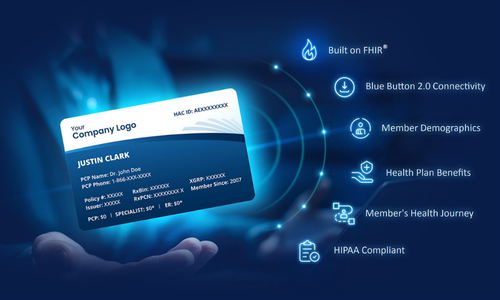
Learn how AaNeel can help empower your members with more connected access to their healthcare information this enrollment season. 👉 www.healthaccesscard.com