Social Determinants of Health
Healthcare Has Been Looking in the Wrong Direction
Why Social Determinants of Health Are Changing the Conversation
Healthcare has become remarkably good at measuring disease.
Every day, providers monitor blood pressure, cholesterol, blood sugar, kidney function, medication adherence, and hundreds of other clinical indicators. Sophisticated analytics help identify patients at rising risk, predictive models forecast future utilization, and artificial intelligence is beginning to assist clinicians in making faster, more informed decisions.
Yet despite all of these advances, many organizations continue to face the same frustrating reality. Some patients simply do not improve the way everyone expects they should.
The treatment plan was appropriate. The medications were prescribed. Follow-up appointments were scheduled. Every clinical guideline was followed.
So what happened?
Sometimes the answer has very little to do with medicine.
Perhaps the patient never filled the prescription because groceries had to come first. Maybe transportation fell through, causing another missed appointment. A patient recovering from heart failure may be living alone without anyone to help monitor symptoms. Someone managing diabetes may understand exactly what they should eat but have limited access to healthy food.
None of those circumstances appear on an MRI. They are rarely reflected in laboratory values. Yet they influence health outcomes every single day.
Healthcare has spent decades becoming experts at diagnosing disease. Today, we are beginning to recognize that understanding a person’s life may be just as important as understanding their diagnosis.
Looking Beyond the Clinical Record
This realization is driving one of the most important shifts happening across healthcare.
For years, organizations focused almost exclusively on what happened inside the exam room. Clinical quality measures remain essential, but they tell only part of the story. Increasingly, providers, health plans, and Accountable Care Organizations are recognizing that many of the greatest barriers to better outcomes exist long before a patient arrives for an appointment.
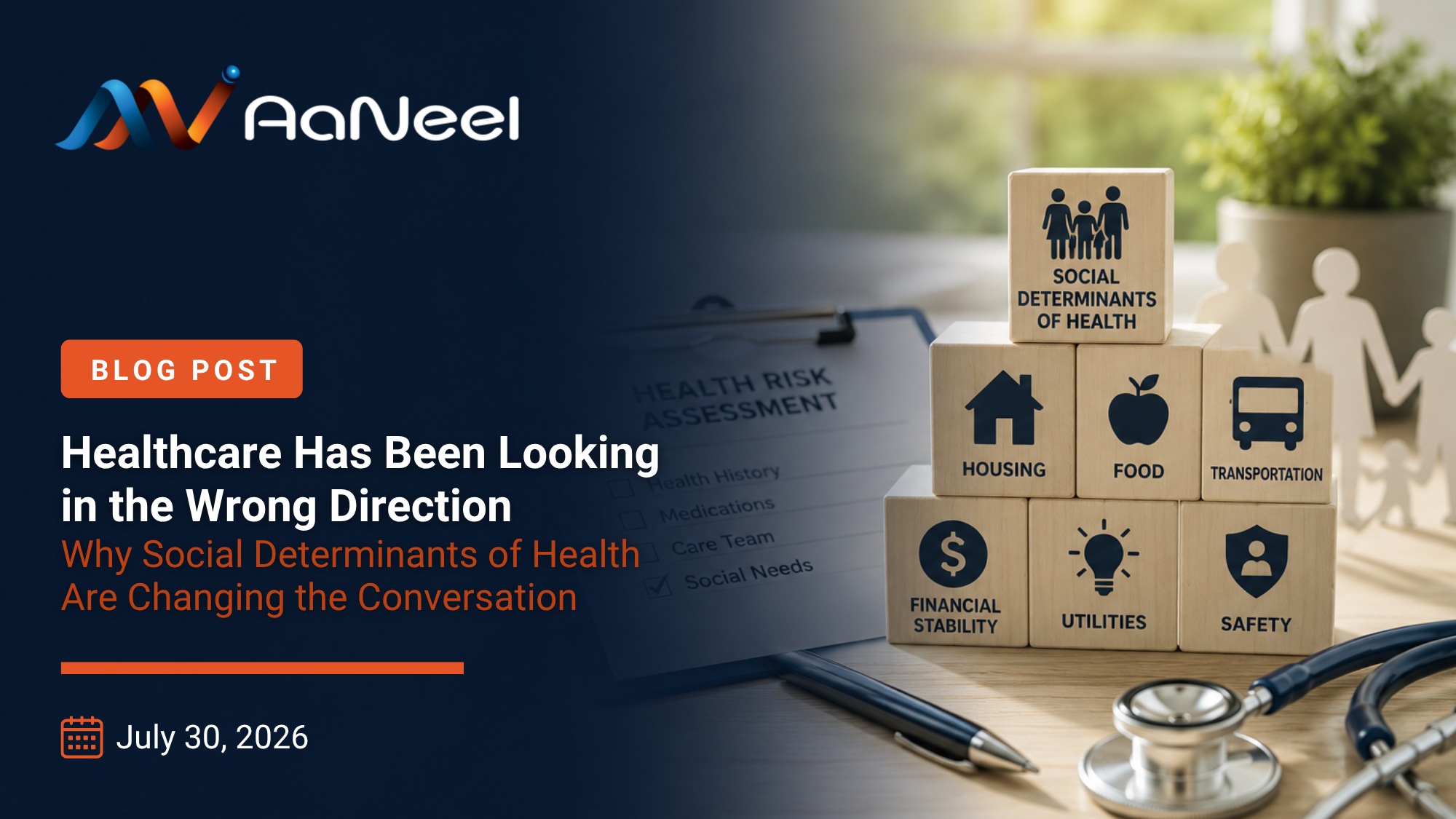
These barriers are known as Social Determinants of Health (SDOH). They include factors such as stable housing, access to nutritious food, reliable transportation, financial stability, personal safety, education, and social support. Individually, each may seem unrelated to clinical care. Collectively, they often determine whether a patient can successfully manage chronic disease, recover after hospitalization, or follow a treatment plan.
In other words, clinical care explains what is happening. Social Determinants of Health often explain why.
That distinction changes everything.
Why CMS Is Paying Attention
The growing emphasis on Social Determinants of Health is not simply another regulatory initiative. It reflects years of research demonstrating that nonmedical factors play a significant role in health outcomes, healthcare utilization, and overall costs.
CMS has responded by encouraging standardized SDOH screening across multiple care models, including ACO REACH. Organizations are expected to identify social needs using standardized assessments that evaluate areas such as housing instability, food insecurity, transportation access, financial strain, utility challenges, and interpersonal safety. These screenings help create a more complete understanding of the patient while supporting consistent reporting and better care coordination.
It would be easy to view these assessments as another compliance requirement.
That would be missing the point.
The real opportunity is not collecting more information. It is collecting the right information.
Better Questions Lead to Better Care
Imagine two patients who both miss three appointments over the course of a year.
On paper, they look nearly identical.
One forgot.
The other has no reliable transportation.
Those are two entirely different problems requiring two entirely different solutions.
The same principle applies across virtually every area of healthcare. A patient who cannot afford groceries may struggle to control diabetes despite following every clinical recommendation. Someone without reliable electricity may have difficulty storing medications properly. A patient experiencing social isolation may face a far greater risk of readmission than another patient with the exact same diagnosis.
The clinical condition never changed.
The patient’s circumstances did.
That is why Social Determinants of Health have become so important. They provide the context that allows providers to move beyond treating disease and begin addressing the factors that influence whether treatment succeeds.
Turning Insight Into Action
Of course, asking better questions is only the beginning.
Healthcare organizations still need a practical way to collect, manage, document, and act on that information without creating additional administrative burden for already busy care teams.
That is where technology should make healthcare simpler, not more complicated.
AaNeel integrates standardized Social Determinants of Health assessments directly into existing Health Risk Assessment workflows. Care teams can document member outreach, complete CMS supported questionnaires, capture required demographic and social needs information, and automate reporting for quarterly and annual CMS submissions without relying on disconnected spreadsheets or manual processes. Because the assessments become part of the broader care workflow, organizations gain more than compliance. They gain a more complete understanding of the people they serve.
More importantly, those insights can help care managers identify barriers earlier, coordinate appropriate resources, and intervene before social challenges become avoidable healthcare crises.
The Future of Healthcare Is Understanding People
Healthcare is entering a new chapter.
For decades, innovation focused on generating more clinical information. Today, the greatest opportunity may lie in understanding the information we have been missing all along.
As value based care continues to mature, organizations that combine clinical data with Social Determinants of Health will be better positioned to improve outcomes, reduce unnecessary utilization, and deliver care that reflects the realities patients face outside the walls of a healthcare facility.
Because patients do not leave their lives at the door when they walk into a doctor’s office.
They bring every challenge, every responsibility, and every circumstance with them.
The organizations that recognize that reality will not simply provide better healthcare.
They will provide better care.