Patient-Centered Innovation
From Fragmented Care to Connected Care:
The Rise of the Patient-Centered Ecosystem
For years, healthcare has talked about being “patient-centered.” But let’s be honest. Most systems were still built around providers, payers, and processes, not the patient.
That is starting to change in a very real way.
Under the leadership of Dr. Mehmet Oz at the Centers for Medicare & Medicaid Services, a new vision is taking shape. One that moves beyond incremental change and toward something much more ambitious: a fully connected, patient-centered care ecosystem.
And this is not just a philosophy. It is a roadmap.
What a Patient-Centered Ecosystem Actually Means
At its core, this shift is about putting control, access, and visibility directly into the hands of patients.
That includes:
- Giving patients real access to their health data
- Making care more proactive instead of reactive
- Using technology to simplify, not complicate, the experience
- Expanding care beyond hospitals into communities and homes
- Aligning incentives around outcomes, not volume
CMS has been clear about this direction. Their modernization efforts are focused on improving access, transparency, and coordination across Medicare, Medicaid, and Marketplace programs.
This is about moving from “sick care” to continuous care. And that requires a completely different infrastructure.
The Technology Layer Driving It All
You cannot have a patient-centered system without data flowing seamlessly. That is why interoperability is at the center of this transformation.
CMS is actively working toward a national health technology ecosystem that allows data to move across providers, payers, and applications.
This includes:
- API-driven data exchange
- Faster access to claims and clinical data
- Digital identity solutions for patients
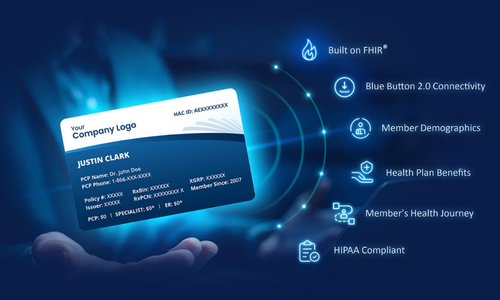
- FHIR-based digital insurance cards
- A national provider directory
If that sounds familiar, it should. This is the foundation for eliminating fragmented records, disconnected workflows, and the infamous clipboard experience.
The Rise of CMS-Aligned Networks
One of the more interesting developments is the introduction of CMS-Aligned Networks.
These networks bring together:
- EHR vendors
- Health Information Exchanges
- Payers
- Providers
All operating under a shared interoperability framework.
The goal is simple. Patients should be able to access and share their data without needing separate logins, portals, or systems for every provider they see.
That is a massive shift. And it is exactly what the industry has been trying to solve for decades.
AI, Remote Monitoring, and the New Care Experience
Technology is not just about data exchange. It is also about how care is delivered.
CMS is leaning heavily into:
- AI-assisted care navigation
- Remote patient monitoring
- Digital health applications
- Patient-facing tools for scheduling, tracking, and engagement
According to insights shared through the American Journal of Managed Care, AI is expected to support clinicians, not replace them.
Think about what that means in practice:
- Patients receive guidance between visits
- Providers get better decision support
- Chronic conditions are managed continuously
- Communication improves without adding burden
This is how care becomes more accessible and more human at the same time.
Expanding Beyond Clinical Care
One of the most important aspects of this ecosystem is the inclusion of social determinants of health. Healthcare outcomes are not driven solely by clinical care.
They are shaped by:
- Housing
- Nutrition
- Transportation
- Community support
Organizations like Civitas Networks for Health have emphasized the importance of integrating these factors into care delivery. CMS is now embedding this thinking into its broader strategy. That means care coordination will increasingly extend into community-based services and support systems.
The Shift to Value-Based Care
None of this works without changing how healthcare is paid for. That is why value-based care remains a central pillar of this transformation.
Instead of rewarding volume, CMS is pushing toward:
- Outcome-based reimbursement
- Total cost of care models
- Population health management
- Preventive and chronic care incentives
Programs like the AHEAD Model are already testing this at scale. The goal is alignment. Providers, payers, and patients all working toward better outcomes, not more services.
The Roadmap: Where We Are and Where We Are Going
This transformation is happening in phases.
2025: Foundation
- Infrastructure planning
- Stakeholder input through RFIs
- Launch of interoperability framework
- Early development of national tools
2026: Early rollout
- CMS-Aligned Networks go live
- Patients begin accessing data more easily
- APIs enable real-time exchange
2026 to 2027: Expansion
- Growth of digital health apps
- Remote monitoring adoption
- AI tools integrated into workflows
2027 to 2028: Payment reform
- Broader adoption of value-based models
- Alignment across payers and providers
2028 and beyond: Scale
- Fully interoperable ecosystem
- Predictive analytics at population level
- Continuous, coordinated care
This is not theoretical. It is already in motion.
The Challenges We Cannot Ignore
As exciting as this is, there are real challenges.
- Smaller providers may struggle with infrastructure costs
- The digital divide could leave some patients behind
- Data privacy and security concerns will grow
- Adoption is voluntary, not mandated
- Payment models are still evolving
Organizations like the Bipartisan Policy Center have highlighted the risks around digital access and equity. This transformation will not be easy. But it is necessary.
What This Means Moving Forward
For patients, this means more control, more transparency, and a more connected experience.
For providers, it means new workflows, new expectations, and a shift toward accountability for outcomes.
For the healthcare industry as a whole, it means something bigger.
A move away from fragmented, episodic care and toward a system that is continuous, coordinated, and truly centered around the individual.
The Bigger Picture
This is more than a technology initiative. It is a redefinition of how healthcare works.
A system where:
- Data follows the patient
- Care extends beyond the clinic
- Technology supports human connection
- Outcomes matter more than volume
And if done right, it has the potential to deliver something healthcare has struggled to achieve for decades.
Better care. Better outcomes. And a system that actually works for the people it serves.